
SpreeSparks: Stuck? Try This 2-Minute Unstuck Method (Grounded + Simple)

stuck man getting inspiration from SpreeSparks radiating out of his computer

When you feel frozen, it’s rarely because you “lack discipline.” More often, your brain is reacting to one of four things:

  • Overwhelm (the task feels too big)
  • Uncertainty (you don’t know what to do first)
  • Perfection pressure (starting feels like committing to doing it “right”)
  • Low energy (you’re depleted, so everything feels harder)

This method isn’t about pushing harder. It’s about reducing friction so you can restart motion.

SpreeSpark: If you can’t start, the next step isn’t clear or small enough.

The 2-Minute Unstuck Method

1) Name the block (15 seconds)

Say or write:

“I’m stuck because ______.”

Why it works: naming the barrier turns “stuck” into something specific you can address.

Examples:

  • “…it feels like too much.”
  • “…I don’t know what done looks like.”
  • “…I’m afraid I’ll waste time doing it wrong.”
  • “…I’m tired.”

2) Define “done” in one sentence (20 seconds)

Write:

“Done means: ______.”

Why it works: vague tasks create endless mental load. Clear “done” gives your brain a finish line.

Examples:

“Done means: an email with 3 bullet points sent.”

  • “Done means: a rough outline with 5 headings.”
  • “Done means: dishes in the dishwasher.”
  • “Done means: the form submitted.”

If it’s a big task, use: “Done for today means: ______.”

3) Pick the smallest next action (25 seconds)

Choose something physical + specific—an action you can do even without confidence.

Good next actions:

  • Open the doc and type the title
  • Write the first heading
  • Create a 3-item checklist
  • Gather what you need (supplies. resorces)
  • Send one clarifying message (“Can you confirm X by today?”)

Why it works: your brain resists “a project,” but it can tolerate one step.

4) Set a 2-minute timer and start (60 seconds)

Two minutes is short enough to bypass resistance but long enough to create momentum.

When the timer ends, choose one:

  • Stop on purpose and schedule the next 10 minutes, or
  • Continue for another 5–15 minutes if it feels doable

Either way, you’ve changed the state from stalled → started.

If You Still Can’t Start

Use the “one unit” rule:

  • One sentence
  • One checkbox
  • One tab opened
  • One item put away
  • One question asked

You’re not trying to finish—you’re trying to break inertia.

Q&A: Getting Unstuck (Common Roadblocks)

Q: What if I don’t know where to start?

Start with Step 2: define “done.” If you can’t, your first 2-minute action is:

“List 3 possible first steps.” Then choose the easiest one.

Q: What if the task feels too big?

Shrink the scope to “done for today.”

Example: not “write the report,” but “create the headings” or “write the first paragraph.” Big tasks move forward through small starts.

Q: What if I’m stuck because I’m tired?

Don’t force a high-output session. Choose a low-energy progress step: outline, prep, organize, or send one message. Momentum still counts when capacity is low.

Q: What if perfectionism is the problem?

Make the first version intentionally rough: label it v0. Your goal is not quality—it’s something editable. You can’t improve what doesn’t exist.

Q: What if I start and still feel stuck after 2 minutes?

That’s normal—stuck can come in layers. Repeat the loop once more:

“I’m stuck because…”

  • “Done means…”
  • “Smallest next action…”

Often the second pass reveals the real blocker (uncertainty, unclear finish line, missing info).

Q: What if I’m stuck because I don’t want to do it at all?

That’s not a productivity issue—it’s a priority/values issue. Ask:

Does this actually need to be done?

  • Can I delegate it?
  • What’s the minimum acceptable version?
  • What’s the consequence if I delay it?

Sometimes “unstuck” means reducing the burden, not powering through.

✅ Want help finding easy first steps? Happyspree App → Try ThinkyFit Reframe. Write “I’m stuck because…” → Choose one 2-minute action → 📲 HappySpree https://bit.ly/happyspree

#SpreeSparks #GetUnstuck #Motivation #Inspiration #ProcrastinationHelp #Overwhelm #FocusTips #TinyHabits #ProductivitySystems #EmotionalRegulation #WorkSmarter #Happyspree


SpreeSparks: 5 Secrets to Make New Year’s Resolutions That Actually Work (Skip the Willpower War)

You already know the vibe: New Year’s hits. You feel inspired. You declare a bold resolution like:

  • “I will lose weight.”
  • “I will find my dream job.”
  • “I will finally be consistent.”

And then… life shows up. Stress. Cravings. Procrastination. That “I’ll start Monday” loop. Here’s the truth: resolutions don’t fail because you’re weak. They fail because your conscious mind wants change… but your subconscious mind wants safety.

So when you say, “I will lose weight,” your conscious mind nods—but your subconscious whispers, “This cookie makes me feel better right now.” That internal tug-of-war is exhausting. And brute-force repeating affirmations can actually make the battle louder.

Try a different approach: sync the conscious + subconscious so your goals stop feeling like a fight—and start feeling like momentum.

🔥 SpreeSparks Callout

If your resolution requires constant willpower, it’s built on friction. If your resolution feels emotionally aligned, it’s built on flow.

Why Affirmations Sometimes Don’t Work (And Why You Shouldn’t Quit Them)

Affirmations can be powerful when they’re believable—because positive self-talk can shift attention, build optimism, and strengthen new mental “paths” over time.

The problem isn’t affirmations. The problem is affirmations that your deeper mind rejects. So instead of forcing yourself to repeat something you don’t believe…use these 5 SpreeSpark Secrets to make your resolution feel true enough to grow.

5 Secrets to Make Resolutions Stick

1) Choose Words Your Mind Can Believe (Start Smaller Than You Think)

A resolution like: “I accept myself and I deserve great things” can backfire if your brain instantly pulls up “evidence” against it:

  • “I’ve messed up before.”
  • “I’m inconsistent.”
  • “I always fall off track.”

Instead of forcing belief, build belief. Try a “bridge” statement your mind can’t argue with:

✅ “I’m learning to accept myself more each day.”

✅ “I’m practicing showing up for myself.”

✅ “I deserve good things, and I’m taking one step today.”

Why it works: your brain starts scanning for proof that you’re improving—because it actually feels possible.

⭐ Quick SpreeSparks Upgrade

Replace ALL-or-NOTHING resolutions with BETTER-than-BEFORE resolutions. “I’m becoming…” beats “I must…”

2) Turn Your Affirmation Into a Question (Let Curiosity Do the Heavy Lifting)

Your mind loves solving problems. So instead of stating a goal like a command, try asking it like a mystery.

Examples:

“How can I make movement feel easier this week?”

  • “What would make healthy food feel satisfying today?”
  • “How can I become the kind of person who follows through?”

Questions invite solutions instead of resistance. If a negative thought pops up (it might), don’t panic—follow it with better questions:

  • “Why do I feel this way?”
  • “What do I need right now?”
  • “What’s one gentle next step?”
  • “What would I tell a friend in my situation?”

That’s not “positive vibes only.” That’s real alignment.

3) Write the Resolution (Because Thoughts Fade, But Ink Trains Your Brain)

Writing makes your goal concrete. It slows your mind down enough to notice hidden resistance.

Try this SpreeSpark journaling mini-script:

1) My resolution is: __________

2) The part of me that resists is afraid of: __________

3) A version I can believe today is: __________

4) My smallest next step is: __________

Then rewrite your “believable version” 3 times.

Not as punishment. As programming.


✍️ Tiny Ritual, Big Results

Write your resolution where you’ll see it daily: notes app, lock screen, mirror, or journal. Visibility beats motivation.

4) Say It Out Loud (But Make It Short + Real)

Out loud matters because it makes your goal feel solid—less like an idea, more like identity. Keep it simple. Repeat 3 times, 3 times a day (morning / midday / evening).

Try these SpreeSparks-ready examples:

  • “I keep promises to myself—starting small.”
  • “I’m building momentum with one step.”
  • “What’s my next kind choice?”

If it feels fake, reduce the intensity until it feels true. Believable > dramatic. Always.

5) Take One Visible Action Today (Action Is the “Proof” Your Subconscious Needs)

Your subconscious doesn’t trust words. It trusts evidence. So your resolution must include one action that proves, “We’re really doing this.”

If your resolution is:

“How can I live life to the fullest?”

Your action could be:

  • Text one friend to plan a coffee
  • Apply to one job
  • Walk for 8 minutes
  • Drink a glass of water
  • Do a 2-minute tidy
  • Book one therapy session
  • Learn one small skill

Don’t wait for inspiration. Inspiration is the reward for action.

🚀 The Top Dog Rule

If your resolution has no “today step,” it’s a wish. Add a tiny action and it becomes a system.

SpreeSparks “Copy-Paste” Resolutions That Actually Work

Use these as-is:

For Health

  • “How can I make my body feel 1% better today?”
  • “I’m becoming someone who moves daily—even gently.”

For Confidence

  • “What would self-respect look like in the next 10 minutes?”
  • “I’m learning to trust myself again.”

For Money / Career

  • “What’s one move my future self would thank me for?”
  • “I take small brave actions daily.”

For Relationships

  • “How can I show love in a way that’s easy to repeat?”
  • “I build connection one message at a time.”

Q&A: SpreeSpark Resolution Questions People Actually Ask

Q1: Why do I feel motivated for a week and then crash?

Because motivation spikes from novelty. What lasts is identity + environment + tiny routines. Make the goal smaller and repeatable, not heroic.

Q2: What if I don’t believe anything positive about myself?

Start with neutral truth.

Try: “I’m willing to try.”

Or: “I can take one step.”

Belief is built—like muscle.

Q3: Are affirmations better in the morning or at night?

Both can help. Morning sets direction. Night reinforces identity. The real key is consistency—and using words you can believe.

Q4: What’s the fastest way to make a resolution stick?

Pair the resolution with a daily micro-action and track it. Your subconscious changes when it sees proof.

Q5: What should I do when I mess up?

Do the smallest “re-start” possible within 5 minutes.

Example: drink water, 10 breaths, 1-minute walk, rewrite your bridge statement once.

SpreeSpark isn’t perfection—it’s recovery speed.

Ready to make your resolution feel natural instead of stressful? The HappySpree App helps you:

  • Turn goals into glow goals
  • Reframe “problems” as challenges
  • Build consistency with tiny daily wins

📲 HappySpree— tiny wins, brighter days, and Positive Sparks that ripple outward. https://bit.ly/happyspree 

#HappySpree #SpreeSpark #NewYearsResolutions #GoalSetting #Affirmations #Motivation #Success #Inspiration #MindsetShift #HabitBuilding #SelfImprovement #PersonalGrowth #MentalWellness #PositivePsychology

HappySpree’s Feel Your Feelings Playlist–Process Negative Emotions To Feel Better Faster

(Photo credit Kristopher Roller)

We all feel angry, mad, or sad sometimes and that’s ok.  It’s not healthy to strive for constant happiness.  Trying to force happiness at inappropriate times can signal mental health issues, such as mania.  So, if your pet dies or a relationship ends, negative emotions are appropriate.  We need to take time to process our emotions and feel them.

Emotional processing occurs when a person experiences a negative event and can cope with the event as time passes.  We all face challenges that cause fear, sadness, and anxiety but these feelings are temporary for the majority of people.

There are many ways to process, or reduce, emotions.  You don’t want to get stuck feeling sad or angry long-term, right?   Masking emotions with unhealthy behaviors, like abusing alcohol, or blocking feelings doesn’t help us heal.

Listening to music is a one healthy way to process emotions.  Sad music lets us grieve, and gets the tears out, so that we can feel our emotions and heal faster.  Also, angry music lets us feel anger and safely release it.  So, use our Feel Your Feelings playlist as a catalyst for emotional health.

Feel Your Feelings Playlist

1. Say Something – A Great Big World, Christina Aguilera

2. Fix You – Coldplay

3. Someone Like You – Adele

4. Somebody that I used to Know – Gotye, Kimbra

5. Because of You – Kelly Clarkson

6. A Little Bit Stronger – Sara Evans

7. Everything I Wanted – Billy Eilish

8. Somebody that I used to Know – Gotye, Kimbra

9. Hurt – Johnny Cash

10. Stitches – Shawn Mendes

11. We Don’t Talk Anymore – Charlie Puth Ft. Selena Gomez

11. Memories – Maroon 5

We all need to cry it out sometimes.  Feeling anger, sadness and hurt think can help us discover lessons learned from an experience.  You can benefit from post-traumatic growth by finding benefits in negative events.  For instance,  you might decide to listen more, or talk through challenges in your next relationship instead of pushing away problems.  Also, after a hurt, you might have more time to focus on going back to school, learning guitar, or creating art.  Finally, emotional processing can help us avoid past mistakes, and this can be combined with post-traumatic growth to create your Best Possible Future.

Want more happiness and to track your happiness trends?  Join HappySpree

About the author(s)


Kendeyl Johansen

Kendeyl Johansen is a tech geek creating inspirational multimedia content to increase happiness and health for individuals and organizations.


Shellee Godfrey

Shellee Godfrey creates happiness for her clients as a Systems Analyst and writes comedy screenplays based on her smart and sassy 80’s diva background.


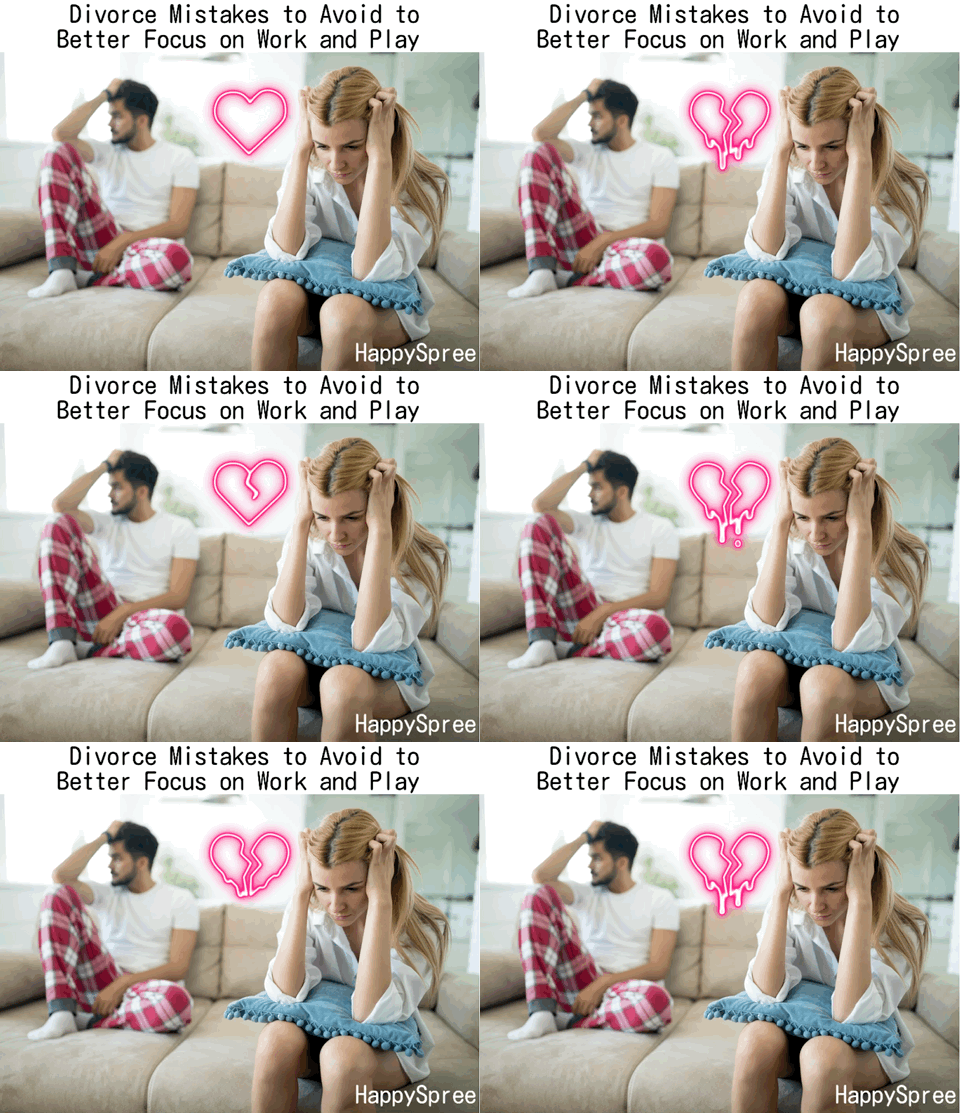
7 Divorce Tips to Avoid My $80,000 Mistake: How Not to Fund Your Divorce Lawyer’s Porsche while Protecting Your Financial Future

It’s likely you, or someone you know, will get divorced and have to deal with divorce while at work and while trying to balance other priorities. Nobody plans on divorce when eating wedding cake, but the American Psychological Association reports 40-50% of married couples in the United States will divorce. Also, divorce figures worsen for subsequent marriages. 

The tips, below, are heartfelt shares from unfortunate divorce settlements, including mine, that I hope will help others have less stress spilling over at work and home during divorce. 

Sadly, financial divorce mistakes cost my family $80,000 in legal fees. The lawyers are smiling, but I would have preferred funding my kid’s college education. 

When getting divorced, save money, and your sanity by resolving the financial issues below before signing your divorce decree.

Initials replace names in examples to protect privacy, and also to keep vengeful exes from my doorstep.

1) Don’t accept a divorce agreement that’s unfair for you.

Many people, especially women in my experience, accept unequal financial agreements. This happens because people desire quick freedom, or mistakenly think their ex will be fair after a divorce. 

K.S.’s lawyer threatened to quit if she accepted the pittance offered by a multi-millionaire spouse, but she wanted out and signed. She regretted it later when squeezing into a tiny apartment with three kids. Also, J.C.’s ex promised to pay child support for two kids, but she left town and never paid a dime. 

So, think through future financial impacts to make smart decisions you won’t regret later. To be more objective about financial decisions, ask yourself what you’d advise your best friend to do.

2) Split all assets before signing divorce papers.

Some post-divorce relationships are amicable, but ask around, and you’ll learn many start out friendly before dive-bombing. Your future ex’s priorities may change after realizing you’re never coming back, ever, or when a new love interest enters the mix. 

Do you want an angry ex refusing to sell your vacation home or split your investment account, causing you to go back to court? Trust me, no. You don’t have a crystal ball, so protect your financial future by spitting all assets before signing your divorce decree. The only person determining your post-divorce financial decisions should be you. 

2) List all account numbers in your divorce decree.

A “misunderstanding” of which accounts need to be split can tie up your money for months until courts can rule. This caused me four months of financial stress, and also I had to pay penalties and cash out my 401K to pay bills. Avoid financial stress by adding financial account numbers to your decree.

3) Assign completion dates for action items and consequences for non-compliance.

D.D. was forced to pay $500 per month in golf club membership fees despite never golfing. This took three years to meander through the courts, and it cost $18,000!

4) For jointly-owned property sales specify the following in your divorce decree:

·     realtor’s name

·     minimum selling price

·     beginning listing date

·     consequence for non-compliance of required tasks.

If these items aren’t specified, your ex may refuse a fair sales offer for your home(s). This might crawl through the courts, while legal fees accumulate. 

For example, D.K’s ex refused an offer of $25,000 above the asking price, because the selling price wasn’t specified, and the ex didn’t want to sell. Two years later, the house still isn’t listed, with no end in sight.

5) List ownership of miscellaneous items, such as college accounts, or cars you have gifted to kids, etc., in your decree. 

You don’t want to pay courts to sort out miscellaneous items later. N.J. doesn’t have ownership of kid’s college accounts, and this caused stressful issues with college expense allocation.

6) If you have minor children, document the details of your custody agreement and visitation schedule.

Take time to get this right. Don’t assume your ex will agree to future changes, or later be flexible about an agreed-upon schedule. 

7) List all paperwork needed for taxes or other purposes, dates for providing this, and consequences for inaction.

Not doing this cost Y.H. headaches and stress at tax time. 

So, I wish I’d had this information prior to my divorce, which is why I wrote these tips. I humbly hope they will save others the stress and expense of mistakes, and also help to resolve divorce issues sooner, so focus can return to work and play. Please consider passing this information on to those that might need it. 

What’s missing from my list? Please comment, like, and share.

Kendeyl Johansen is a tech geek creating inspirational multimedia content to increase happiness and health for individuals and organizations.

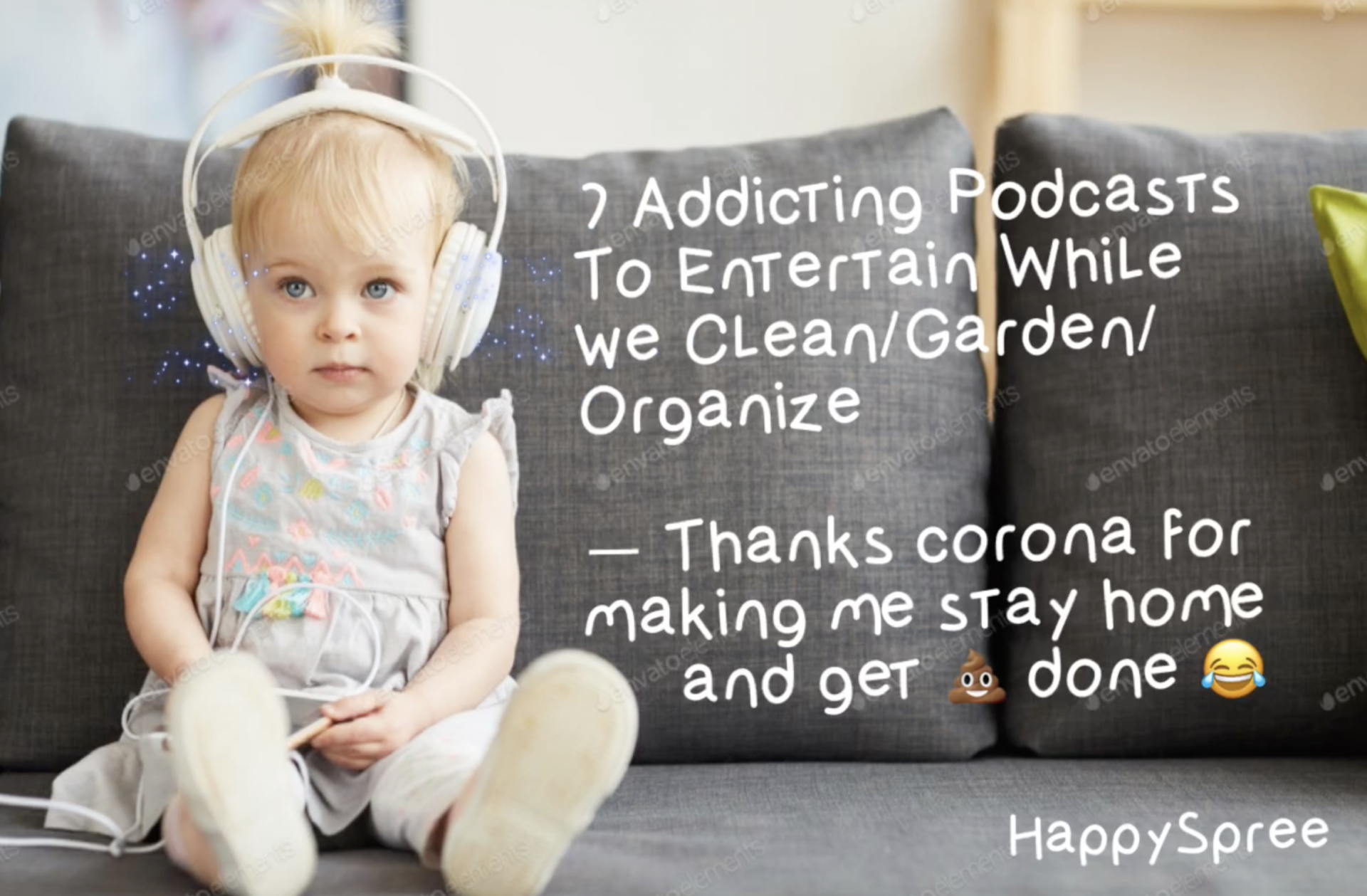
Want some addicting listening fun? 7 Great Podcasts To Enjoy and Spice Up Chores and Boring Tasks

little girl listening to headphones

Want some addicting fun this weekend? These great podcasts will make spring cleaning, gardening, or organizing fly by, and getting chores done can increase your happiness and well-being. 🤣 Watch out for your fingernails though, many of these award-winning podcasts are 5-star suspenseful. You might find yourself cleaning more than you planned.

1) Carrier

A new truck driver struggles to deliver the mysterious cargo locked in her truck.

2) Blackout

A DJ struggles to protect his loved ones amidst a world-wide blackout and apocalypse.

3) Alice Isn’t Dead

A truck diver searches America for the wife she thought was dead.

4) The Edge of Sleep

Could you stay awake if your life depended upon it? Everyone that fell asleep last night is dead so survivors struggle to solve a global pandemic before they fall asleep.

5) Imagined Life: you share a mysterious celebrities roller-coaster journey to fame while trying to guess who “you” are.

6) Revisionist History

Malcolm Gladwell reinterprets past events through a modern lens.

7) Joe Exotic

Tiger King: enter the bizarro world of exotic animal zoos and arch nemesis rivalries. Did Carol feed her husband to the tigers? What will happen to Joe?

Podcasts a fun option for entertainment while finishing tasks that are repetitive or boring, or maybe you just want to close your eyes in the sunshine and listen to something interesting. I go through podcasts quickly, lol and always need more. I have tons of yard work I need to do this summer, so what are some of your favorite podcasts?

About the author(s)

Kendeyl Johansen

Kendeyl Johansen is a tech geek creating inspirational multimedia content to increase happiness and health for individuals and organizations.

Decide who you want to be and be that person

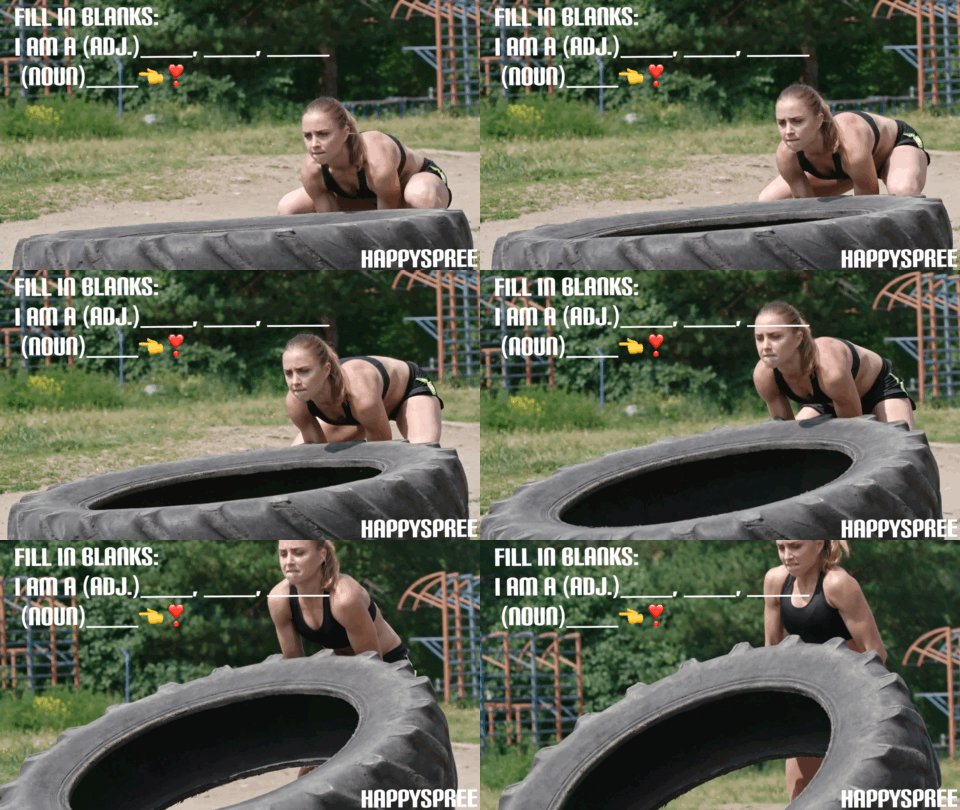
Now is a time of thoughtfulness and change. Decide who you want to be and be that person 👈❣️

So take a few minutes to fill in the blanks:

I am a (adj.) _____, ______, ______, (noun) _____.

Here’s mine:

I am a passionate, smart, inspirational creator of happiness, wellbeing and health.

So repeat your sentence out loud when feeling fear, anxiety or worry and then use your vision to find a solution and feel better.

Thanks Nick Unsworth, and Bryan Dulaney for providing the fill-in-the-blanks to clarify my vision.

👉What’s your vision? 👈

Want more happiness and to track your happiness trends?  Join HappySpree

About the author(s)

Kendeyl Johansen

Kendeyl Johansen is a tech geek creating inspirational multimedia content to increase happiness and health for individuals and organizations.

.A Rebirth Out of Adversity Causes Us To Become New Creatures — James E. Faust

A rebirth out of adversity causes us to become new creatures

— James E. Faust

Why does change feel uncomfortable?

It often stems from fear. 👈

We fear changing our familiar routines because of preconceived beliefs about ourselves. Yet when we stop underestimating ourselves and let go of fear, change can help us grow. 🌱 🦋

This Easter, and on other days of reflection let’s take a few minutes to think about how a change might be positive. Wishing everyone a healthy and happy holiday! 🐣

Want more happiness and to track your happiness trends?  Join HappySpree

About the author(s)

Kendeyl Johansen

Kendeyl Johansen is a tech geek creating inspirational multimedia content to increase happiness and health for individuals and organizations.

HappyHack: Gratitude Journal – Increase Happiness at Home, Work and Play with 3-Minute Tool

(Photo credit kaboompics)

Happiness is not something ready-made. It comes from your own actions.
–Dalai Lama XIV

Our world needs more happiness, especially during this coronavirus pandemic.  Gratitude journals are scientifically proven to increase happiness  (Lyubomirsky, Dickerhoof, Boehm, and Sheldon 2011; Seligman and Anselmo-Matthews, 2012).  Writing down three positive things per day can help depressed people feel better for up to three months and help happy feel happier and stay happy for three to six months.  (SeligmanEmmons & McCoullough Ben-Shahar ).  Increased happiness positively impacts your mental and physical health, family, friendships, community, and our world.  Also, gratitude journals have helped diverse populations feel happier (Chan, 2010; Cunha, Reppold, and Pellanda, 2019; Lyubomirsky et al., 2011).

One study asked participants to write down “three good things” that went well, and why they went well.  Participants did this for seven days.  The best time to write was before bedtime each night.  Researchers found “three good things” increased well-being and lowered depression.

This gratitude intervention works by changing thinking patterns from “what went wrong” to “what went right”.  So this can change, I had a bad day to, I enjoyed walking my dog, my Carrot Cake recipe tasted delicious, and  I had a fun phone chat with a friend,   Click on the video, below, to learn more about how writing down gratitude works from the founder of positive psychology, Dr. Martin Seligman.

Three Good Things

Also, Harvard professor Tal Ben-Shahar, teaches the most popular class at this university, Positive Psychology.   He has kept a gratitude journal every day since 1985.  He states the benefits of gratitude include: greater happiness, optimistic thinking, greater relationship success, increased health and more.  Click this video to hear his thoughts on increasing happiness without needing to pay Harvard tuition.

Five Ways To Become Happier Today

Still need convincing?

Happy people live longer, like the nuns in this study.   The study found “positive emotional content in early-life autobiographies was strongly associated with longevity 6 decades later.”   

Since happiness has many benefits, why not take a few minutes to write down three positives?   You can grab a stick and write them in the sand, or use a piece of paper and a pen, or use the HappySpree Gratitude Journal.  It’s  free, easy and only takes 3 minutes per day.

Create your journal

Need more scientific proof on gratitude journals and increased happiness?   View the research studies below.

Want more happiness and to track your happiness trends?  Join HappySpree

About the author

Kendeyl Johansen is a tech geek creating inspirational multimedia content to increase happiness and health for individuals and organizations.


Scientific Proof for inquiring Minds (References)

Baumgarten-Tramer, F. (1938). “Gratefulness” in Children and Young People. The Pedagogical Seminary and Journal of Genetic Psychology, 53(1), 53-66.

Boehm, J., Lyubomirsky S. & Sheldon K. M. (2011) A longitudinal experimental study comparing the effectiveness of happiness-enhancing strategies in Anglo Americans and Asian Americans, Cognition and Emotion, 25:7, 1263-

1272, DOI: 10.1080/02699931.2010.541227

Carpenter, J., Crutchley, P., Zilca, R., Schwartz, H., Smith, L., Cobb, A., & Parks, A. (2016). Seeing the “Big” Picture: Big Data Methods for Exploring Relationships Between Usage, Language, and Outcome in Internet Intervention Data. Journal Of Medical Internet         Research, 18(8), 373-390.

Chan, D. (2010). Gratitude, gratitude intervention and subjective well-being among Chinese school teachers in Hong Kong. Educational Psychology, 30(2), 139-153.

Cunha, L. F., Reppold, C. T., & Pellanda, L. C. (2019). Positive psychology and gratitude interventions: A randomized clinical trial. Frontiers in Psychology, 10, 584.

Davis, D., Choe, E., Meyers, J., Wade, N., Varjas, K., Gifford, A., . . . Worthington, E. (2016). Thankful for the Little Things: A Meta-Analysis of Gratitude Interventions. Journal of Counseling Psychology, 63(1), 20-31.

Dickens, L. (2017). Using Gratitude to Promote Positive Change: A Series of Meta-Analyses Investigating the Effectiveness of Gratitude Interventions. Basic and Applied Social

Psychology, 39(4), 193-208.

Howells, A., Ivtzan, I., & Eiroa-Orosa, F. (2016). Putting the ‘app’ in Happiness: A Randomized Controlled Trial of a Smartphone-Based Mindfulness Intervention to Enhance Wellbeing. Journal of Happiness Studies, 17(1), 163-185.

Lyubomirsky, S., Dickerhoof, R., Boehm, J., & Sheldon, K. (2011). Becoming Happier Takes Both a Will and a Proper Way: An Experimental Longitudinal Intervention To Boost Well-Being. Emotion, 11(2), 391-402.

Mongrain, M., & Anselmo-Matthews, T. (2012). Do Positive Psychology Exercises Work? A Replication of Seligman et al. Journal of Clinical Psychology, 68(4), N/a.

Seligman, M.P., & Anselmo-Matthews, T. (2012). Do positive psychology exercises work? A replication of Seligman et al. (2005). J. Clin. Psychol. 68, 382–389. doi:

10.1002/jclp.21839

Seligman, M. P., & Csikszentmihalyi, M. (2000). Positive psychology: An introduction. American Psychologist,55(1), 5–14. doi:10.1037/0003-066X.55.1.5

Seligman et al. (2005). J. Clin. Psychol. 68, 382–389. doi: 10.1002/jclp.21839 Seligman, M.P., Steen, T. A., Park, N., Peterson, C. (2005). Positive psychology progress — Empirical validation of interventions. American Psychologist, 60 (5) (2005), pp. 410-421

Watkins, P. C., Van Gelder, M., and Frias, A. (2009). “Furthering the science of gratitude,” in Oxford Handbook of Positive Psychology, eds S. J. Lopez and C. R. Snyder (New

York, NY: Oxford University Press), 437–445.

U.S. National Library of Medicine. (2019). An Online Trial of 5 Well-Being Programs. [Website]. Retrieved from https://clinicaltrials.gov/ct2/show/NCT03233022

Wood, Froh, & Geraghty. (2010). Gratitude and well-being: A review and theoretical integration. Clinical Psychology Review, 30(7), 890-905.

About the author(s)

Kendeyl Johansen

Kendeyl Johansen is a tech geek creating inspirational multimedia content to increase happiness and health for individuals and organizations.